Organised byThe Iran Heritage Foundation
Description
We take so
much for granted when we look only at the visible structures of buildings, but
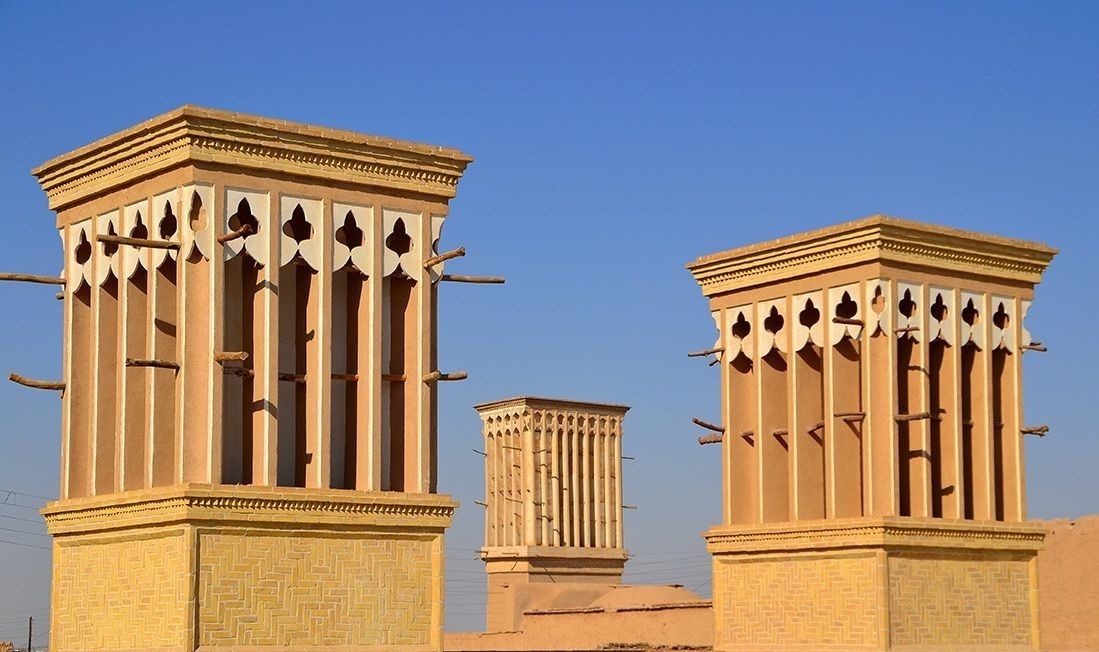
windcatchers demonstrate that their invisible attributes may often be more
important. Their story in Yazd reaches out in many directions, showing how one
apparently simple design feature links us to many aspects of the physical,
historic and political past of the whole region. We see the extraordinary achievements of the
great builders, the Ostads of Yazd, who over time evolved evermore amazing
towers, utilising the natural energy from their sites and regions to bring
comfort cooling, and luxury, to desert homes.
Windcatchers reflect well the turbulent 19th century decades when wealth
was harvested from the far shores of China to make the towers ever more
elaborate, their height and fineness mirroring the rise and fall of Persian
dynasties and the ebbing and flowing of the tides of international change.
While today their appearance adds so much to the economy of the city through
tourism, it is their performance as cooling systems that will eventually leave
a mark on all our futures. There are no passive structures in the world as
effective as these towers at cooling the internal climate of buildings. Using a
dazzling array of strategies they modify temperatures and humidities in and
around the living areas of the traditional homes of Yazd, and will do so again,
when we will all have to increasingly turn back the clock to naturally
ventilate buildings in our common, challenging, future in a Heating World and
Climate Crisis. Biography
Dr Susan Roaf is Emeritus Professor of Architectural Engineering
at Heriot Watt University, and an award-winning author, architect and solar
energy pioneer. In 1995
she designed and built the Oxford Ecohouse, a pioneering home best known for
having the first solar roof in the UK. Her academic
research includes solar systems, micro-grids, energy storage, low carbon, sustainable
and eco design, and traditional energy technologies. She is a promoter of
passive design and is working on ‘extreme design’ ideas for hot deserts and in
Antarctica (www.extremelodge.org).
Her awards include 2013 Top 6 UK ‘First Women’ Awards as a
‘Visionary in the Built Environment’; 2013 Top 10 ‘Women in Architecture’
Awards, Architect’s Journal; and in 2010 ‘the AJ’s most influential UK
architectural academic’ in the field of Sustainable Design. She has judged for
a number of national and international design competitions and is an expert
adviser to organisations in the USA, Austria, New Zealand, Norway and Italy.
Tickets & infoTickets: £10 book now
Free for full
time students – please contact the IHF office to book
Free for registered
Friends of IHF
If you would prefer to pay by cheque, please make it payable to
‘IHF’ and send this along with your contact details to:
IHF, 63 New Cavendish Street, London, W1G 7LP
The talk will
start promptly at 18.30 so please ensure you arrive on time
For any inquiries please contact astrid@iranheritage.org Tel: 020 3651 2121
Forthcoming Events
What's On
Please Support Iran Heritage FoundationIHF receives its funding from individuals, businesses and philanthropic institutions. We accept no funds from any government or political organisation. Please support IHF by clicking on the link below. For other ways of giving, and for US donors please visit our Giving page. |